“The Man Who Saw Heaven”- Portraying Joseph Smith

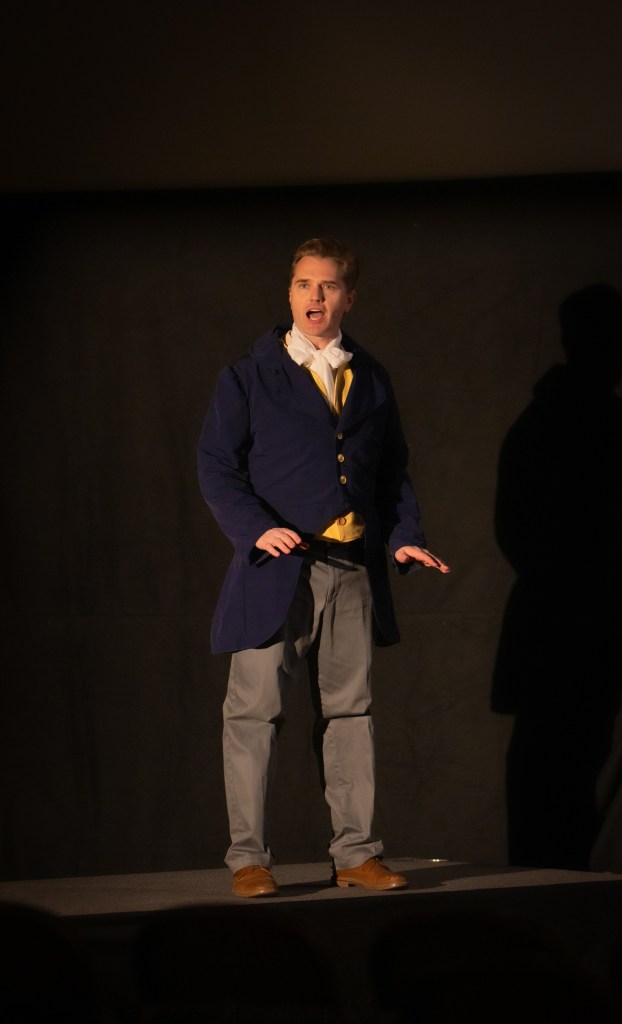
Me singing as Joseph Smith in “The Man Who Saw Heaven,” or possibly yelling, or belching, November 2025

Nearly 22 years ago, my senior year in high school, I fell into a unique and life enhancing opportunity.

The Anchorage Alaska temple of the Church of Jesus Christ of Latter-day Saints, was being re-dedicated. This meant that there was a desire for the local members of the church to put on some kind of cultural production in celebration. The prophet at the time, Gordon B. Hinckley, would be attending this cultural production before the re-dedication ceremony.

An amazingly talented local church member had started writing a musical about the 1890’s Alaska gold rush, and it was decided that this musical would be adapted into the cultural celebration for the temple. Members of the church at that time were asked to come and participate in this musical and begin rehearsals.

At the same time this was happening, I was actively in rehearsals for my high school musical, playing the character of Rolf in “The Sound of Music” (a very fun part to play!). I decided to audition for this temple musical as well and was offered the lead role. Unable to rehearse two musicals at the same time, I ended up quitting The Sound of Music and committed to the temple musical which was called “In the Shadow of the Mountain.”

Every single one of my Mormon friends also participated in this musical, and I made so many new friends because of this musical. It was so much fun and an incredible bonding experience that fostered and produced lifelong friendships. After a few months of rehearsals, it all came together and we performed in front of the prophet. I even kissed a girl in front of the prophet! The characters we played were fictional, but the stories we shared were real. It an was emotional, impactful, joyful and incredible experience. As a young man about to graduate, attend BYU in the fall, and serve a 2-year mission for the church, it fueled me and kept me focused and driven. It inspired me to be a better person. It was what I needed at that time in my life to get me through the challenges I was about to face.
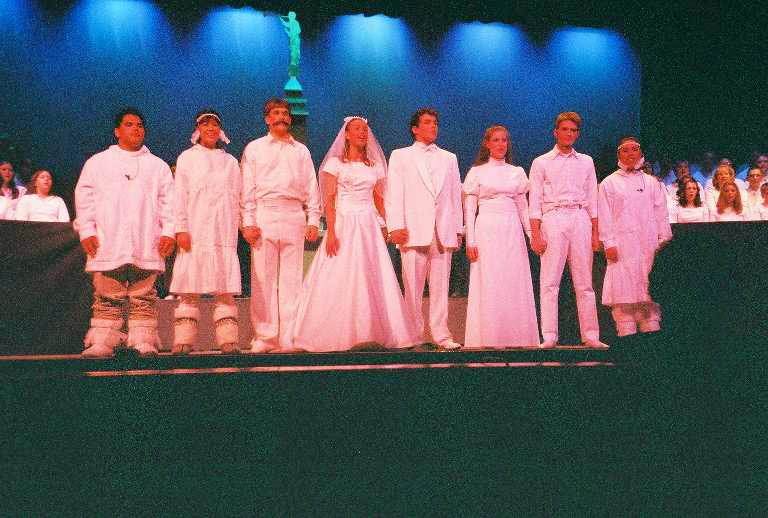
Ending pose of “In the Shadow of the Mountain,” February 2004. I’m second from the right.

Fast forward 2 decades and interestingly enough I found myself in a very similar situation, playing the lead role in an original musical production. Only this time, the character I was playing was a real person.

Joseph Smith Jr.

The musical was called “The Man Who Saw Heaven.” We just wrapped our last show this past weekend. Original music, inspiring messages, and a story based on the life of the first prophet of The Church of Jesus Christ of Latter-day Saints.

As soon as we started recording music and rehearsing, I turned back into that 18-year old boy. That boy had no idea that over the next 20 years of his life he would have some amazing opportunities to perform. Many of those opportunities came from his time attending BYU as he traveled abroad with the International Folk Dance Ensemble, and sang in front of TV cameras with BYU Vocal Point.
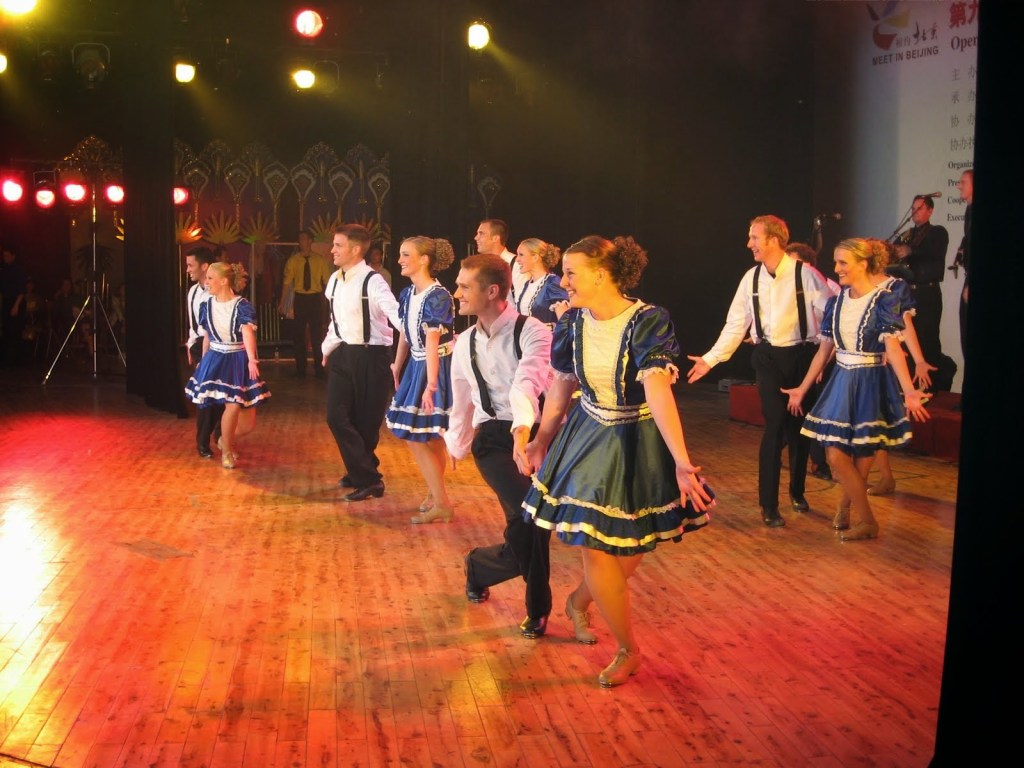
Performing a clogging dance number in Beijing, China with the BYU Folk Dance Ensemble, May 2009. That guy in the center of the photo, skinny skeleton neck, that’s me.
Performing with BYU Vocal Point on NBC’s “The Sing-Off,” September 2011. I’m on the far right.

He would also have 20 years of life experience, some of it joyous and happy as he would marry and start a family, raise children, and find different career opportunities, some of it painful and heartbreaking as he would… marry and start a family, raise children, and find different career opportunities…

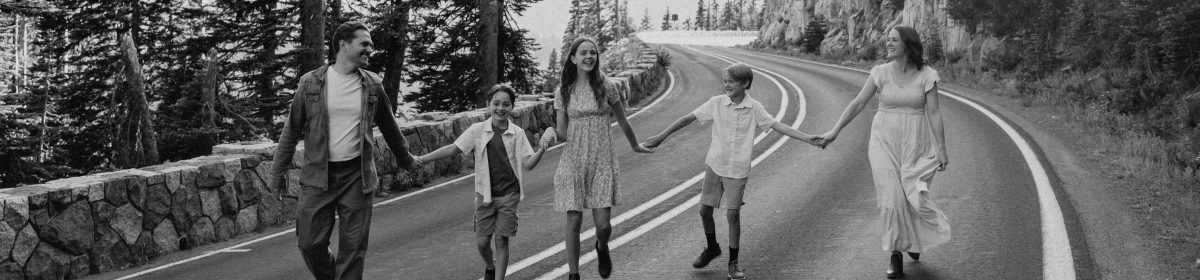
Family photos, July 2024. Yes we always walk in the middle of the road holding hands, smiling and happy.

The point is that the (recently) 40 year old man I am today is a much different person than that 18 year old boy. VERY different. But those feelings, those emotional, impactful, joyful and incredible feelings I felt back then, while they’re the same feelings, it’s like they’ve been bitten by a radioactive sentimental super spider and enhanced to meta-human emotional capacities.

It doesn’t take much these days for my emotions to pop out of my eyes and nose in the form of tears and snot, whether it’s uncontrollable laughter from a hilarious cast constantly cracking jokes, or channeling the painful thoughts of recently turning 40 years old in an intense emotional scene on stage as snot droops uncontrollably all over my hands and face.

Who knew that performing on a stage at a church building in my own backyard could be a more emotionally impactful experience than performing for foreign audiences and on reality TV shows.

Since I came in on this project, I’ve been considering how to portray, and how I feel about portraying Joseph Smith Jr. Before I do I think it’s important to note that I do not know everything about Joseph Smith or church history. But I have read, and studied, quite a bit about him. Over the years I’ve read about his life from many different sources, some very faithful, and some not so much. I’ve read Rough Stone RollingNo Man Knows My HistoryRemembering JosephThe CES Letter, and many more. I’ve listened to countless podcasts of people talking about him, again from all different perspectives. My focus here is not to dive into either side of any debate about who Joseph Smith was or was not. I simply want to share what my experience was portraying this man on stage as part of a theatrical musical production.

How do I portray him?

I decided I would take my cues from the inspiring music, the script, and the message of the show. Joseph Smith, the prophet of God, and a man, called to restore Christ’s church back to the earth. That’s the character I tried to portray. He shared his experiences with the world, and I wanted to help share his story from his faithful perspective. Say what you will about him, but he was earnest, sincere, and did everything he could to fulfill the calling he felt that God placed upon him. I hope I did that justice.

How do I feel about portraying him?

This was a little more complex for me. On one end, it’s just a character that I’m playing. The joy of being a nobody amateur actor is I don’t have to agree or disagree with the character I’m playing. I just get to play a role. I did a lot of plays back in high school and I played good guys and bad guys. Bad guys were often more fun to play. Not because I personally agreed with my character, but because it was fun to play someone so different than myself. How I feel about a character should be irrelevant.

But on the other end, especially in this case, the character of Joseph Smith, a real person who actually lived, and a person that is so engrained in my own religious upbringing, it was impossible for me to not have complex feelings about it. I understand the issues people have with him. I do. I get it. I also understand the faith people have in him as God’s prophet. I can see both sides and everywhere in between, and this effects me personally. How could it not?

But herein lies the message of the show. And for me, this was extremely helpful. It comes in the last two songs of the musical.

The first isn’t actually a song, but a speech entitled “The Living Christ,” delivered passionately by the actor playing the character of Brigham Young. In his speech, he asks:

“If there is something in your life that shakes your faith, then what? Do you look up to heaven and curse God? Do you throw away all the light that has ever illuminated your life? Or do you hold even faster to the little that you do know?”

The second and very last song of the musical is called “This I know.” The message of the song is that there are so many questions surrounding the life of Joseph Smith, and some of those questions might not ever be answered, even today, but despite those questions, the people that knew him and were next to him, felt heaven in his presence.

There is a lot that I don’t know. And my faith has definitely been shaken many times over the years for a variety of reasons. I have no intention of throwing away any light that has illuminated my life, even though it has often felt quite dark. I hope to take as many opportunities as possible to enhance light in my life. No matter what I believe or don’t believe, know or don’t know.

For me, this musical was an opportunity to enhance light in my life. I wasn’t alive back then. I can’t know for sure what happened or didn’t happen. I was never physically next to Joseph Smith. I can’t declare that I felt heaven in his presence. But if I’m lucky enough to get a chance to portray him, share his story, and the stories of those that did live back then and were in his presence, then that sounds like an opportunity to share some light.

And that light that those people felt, and shared, has to count for something.

Me portraying Joseph singing with Emma and some members of “The Man Who Saw Heaven” cast staring at us, November 2025

Harry Potter and the Dad Who Reads Harry Potter to His Kids

Mr. Christensen of Ridgefield, Washington is proud to say that he is perfectly normal, thank you very much.

Now his kids might disagree, in fact they might think their dad is quite strange. Sometimes he dances around the house with moves that make them cry, and not the good kind. Other times he sings loud and boisterous songs he makes up off the top of his head about whatever his kids were up to that day. Most of his songs make no sense, but sense isn’t to be expected in a dad who cheers embarrassingly loudly at soccer games, uses 90’s slang to be cool, and doesn’t understand the intricacies of emoji communication.

But there is one silly thing this dad does that seems to have paid off in some oddly fulfilling, emotionally satisfying, non-financially profitable inspiring way.

He reads to his kids in different character voices.

It’s unclear when the phenomenon started- but by the time these kids were old enough to handle the magical world of Harry Potter, reading in a boring dad voice simply did not suffice. This simple muggle father seems to have tapped into some kind of wizard power procuring his vocal Patronus, repelling the gawky nasal of his natural tone, and replacing it with all sorts of variations, pitches, and accents sure to offend many cultures of different lands.

As for these kids, they didn’t necessarily want it. They certainly didn’t ask for it. But the dad wand chose the kid wiz, and they’re stuck with him whether they like it or not (but they seem to like it!)

Having just wrapped up the Order of the Phoenix (the longest and most difficult read of the series) last night with the boys, they are anxious to find out what happens next (although it’s possible they already know, as the book is nearly 20 years old and someone in the extended family may have spoiled poor Dumbledore’s death).

It’s worth noting, this dad has grown up with these books as they were released, attended every midnight showing of every movie as it was released, and has listened to the Jim Dale audiobook versions more times than perhaps he is willing to admit. Is it possible that some of the voices imitate versions of on-screen actors or audiobook characters? Yes. Is it possible that those voices occasionally change throughout the story because he forgets what someone is supposed to sound like? Absolutely. Do these kids make sure to call him out on it when he gets a voice wrong? All the time.

But the fact that they do, means they’re not only paying attention to the story, but the characters and the narration, as well as how and what is being said. They’re engaged, attentive, and content.

It’s a time of bonding, creativity, wonder, excitement, and happiness. This dad LOVES reading to his kids.

Yes dad does silly voices, but he always has, and this odd little quirk has actually become quite useful. That’s not to say it’s easy, it’s actually quite challenging. Switching in and out of characters can really strain the brain, but it’s slowly become 2nd nature. Now if only someone would pay him to do it.

Often we’ll be sitting around and these kids will request a voice. “Dad, do Hagrid!” or “Dad, do McGonagall!” (those are some of the more fun ones to do). It’s always a blast.

More importantly, there’s only one first time with everything, and more than anything this dad feels honored to be able to share these stories for the first time with his children. He looks forward to reading to them as often as possible, and the wizarding world of Harry Potter continues to bring magic into the life of this family.

Read to your kids. Do the voices. Be a goofy dad.

Life just doesn’t get any better than that.

The Strength of Compassion

Photo by Rémi Walle on Unsplash

What exactly is compassion? And how can I show more of it?

I often find myself writing down thoughts of things I need to work on. Lately those thoughts have revolved around how I can be a more compassionate human.

Overall, I think I’m generally a decent person with an ability to feel love and show compassion to anyone around me. I’ve never doubted for one second the love I feel for other humans in my life, especially my wife and children. That love is unconditional, of course it will always be there, no matter what. But the older my children get, and the more strenuous the turmoil they tend to put me through, I often find myself realizing that I need to work on my own compassion.

If love is a deep and lasting feeling, compassion is how that feeling is expressed.

There have been moments when a child of mine has expressed that they don’t feel loved by me. This causes me enormous pain and confusion because it’s so ridiculously untrue. I can’t believe my child could actually feel that way. And it’s in these moments that I have to evaluate how I show love to each of my children, my wife, and other humans in my life.

I know that I love my family, and I try to express that to them verbally and daily. Verbal expressions of love are the low hanging fruit on the tree of compassion. But how do those verbal expressions of love stack up against the many other memorable and/or unfortunate expressions throughout the day? Expressions of frustration, annoyance, impatience, intolerance, and even anger. If I do an honest intake of my interactions with my children at the end of a difficult and stressful day, from the perspective of my child, it doesn’t take long for me to start to feel guilt for the many mistakes I often make as a parent.

To a child, verbal expressions of love are slippery, they might go in one ear and out the other, like most words a parent speaks to a child. However, visual and tonal expressions of anger are sticky. They don’t go anywhere for a while. There have been several times when my young children have reminded me of some mistake I’d made in the past that still sits with them. It breaks my heart. But it also provides me an opportunity.

I can’t go back and change any mistakes I’ve made. But maybe I can create new memories of sticky compassion.

“Your compassion is a weakness your enemies will not share.” -Ra’s al Ghul

“That’s why it’s so important. It separates us from them.” -Bruce Wayne/Batman

It’s a classic quote from a fantastic movie. And 100% true. Compassion is not weakness. It’s strength. Strength to not react to the anger of the moment. Strength to take a step back and consider the effects of my actions on others. Strength to hold my mortal tongue from speaking words I will regret, and may remain imprinted on the minds and hearts of someone I love.

Of course that’s not to say that we should never feel or express those feelings of anger, frustration, or pain. Holding in frustration and anger creates longer lasting damage within ourselves and likely those around us at some point when we inevitably explode.

But the few times in my life that I have been able to temper my emotions in the moment and allow myself to feel love and express compassion to that person I love, that’s a moment that sticks with me. Whether it’s acknowledged or not by the person to be loved, I can feel the strength of the moment. The strength of compassion. 

Like a muscle, I feel it get stronger every time I’m able to do it. It gets easier the next time I feel the weight of the moment. Sometimes it’s too much for me to bear, and I give up and don’t push through the pain. And that’s ok, life is just plain unbearable sometimes. The weight is too heavy. And in those moments, I have to remember to be compassionate with myself. I’m often too hard on myself, or get in my own head with the woulda coulda shoulda’s.

In those moments, I look to others. Who seems to show this strength of compassion better than me?

Sometimes it’s the very people I’m struggling to show compassion for, like my wife and children. For me, a gentle hug from a child instantly kills any and all feelings of frustration. It invites forgiveness and magnifies compassion. I’m grateful for amazing children who’ve given me this gift many times.

Of course one of the greatest examples of compassion is Jesus Christ. He is not remembered for his wielding of earthly positions of power, political prowess, or unmatched strength of legions and armies, besting his foes and parading about as a man of great pride with important possessions. He’s remembered for his compassion. For his humility. For his ability to feel love for his fellow man, and express that love with a perfect strength of compassion. And he taught us how to do it.

I’m a witness that it’s easier said than done, and that I’m far from perfect at it.

But there is strength in compassion. It may not be flashy or bold. It might seem quiet and content. And some might even call it weak. The loud voices of arrogance tend to drown out the whispers of compassion. So often humility is a hard pill to swallow, but it’s the fuel that keeps the strength of compassion burning.

I will never understand someone else’s life experience. I’ll never be able to feel everything they feel, or know why they make the choices they make. And I can (and have) easily sit back and judge people from a distance. From my limited world view and understanding. And unfortunately we live in a world today that not only praises that kind of behavior, but encourages it, and even claims it as necessary righteous dominion. Holds it up as a thriving and positive way of life. Something to be exonerated and worshipped.

But it’s dispassionate, unkind, and causes tremendous pain.

I firmly believe there is a whole world, an entire life experience, that we have just barely scratched the surface of. There’s a power that’s waiting to be tapped into. And the only way to tap in is to access our own internal sticky strength of compassion. It means letting go of judgement. It means finding some common ground. It means learning from someone different than you.

I hope that, especially as a husband and a father, I can increase my own strength of compassion. As I get older, I’m learning that the main purpose of me being alive is to show love and compassion to everyone around me.

That’s it. Anything else is secondary.

If I can do that better, maybe it will stick, and others can do it with me.

Unplug to Recharge

The story of my experimental lifestyle change of unplugging from my phone to recharge my life.

For the past month or so I’ve been experimenting with a new lifestyle:

I ignore my phone as much as possible.

Let me explain…

I Hate Cell Phones

I bought my first cell phone in 2007 at the age of 22 when I was in college. From the moment I walked out of that Cingular store til now, I’ve hated the idea of having a cell phone.

Up until that point in my life, I had never needed nor desired a device on my person that would put me at everyone’s beck and call anywhere, anytime. Up until that point, if anyone wanted to reach me, they could call my home or apartment phone and if I happened to be there, I would answer. If not, too bad, leave a message I’ll call you back whenever I get to it. I didn’t realize it at the time, but there was something freeing and liberating about this way of life. And it wasn’t unique as it’s how everyone lived an operated until some time in the 90’s when I remember my parents getting their first cell phones.

Don’t get me wrong, as a kid I was fascinated by the technology of cell phones. I was a master of the classic game “snake” on my mom’s Nokia. As a teenager I enjoyed calling my girlfriend from my home phone to her cell phone and chatting for hours, possibly wishing I had my own cell phone so I didn’t have to worry about my parents breathing on the other line listening to my inspiring, eloquent, love-captivating, flirtatious sweet nothings whispered through the electromagnetic radiation waves of technology.

Besides that, I don’t remember ever asking my parents for a cell phone or ever feeling like I had to have one. And for that, I’m grateful. I may have been part of the last generation of teenagers that spent our high school years happily without a cellular device.

After high school I spent 2 years in Ecuador as a missionary and when I came back to college in January of 2007… EVERYBODY HAD CELL PHONES. Apartment landlines became obsolete and I was forced to buy calling cards just to use it. As if I didn’t have enough financial stress as a poor starving college student, I caved and found myself buying a cheap flip phone on a basic plan, something like 250 minutes and 250 texts per month.

I reluctantly entered the next technological paradigm shift of my life.

Dumb Phones

Dumb phone, oh dumb phone, I miss you so,

Your screen was so grainy, your buttons so small,

The satisfying feeling of snapping you shut,

Your cheap plastic shell was more than enough,

Your camera was crappy, your service was bad,

Your buttons were clicky and sticky and sad,

But hey, I could text just about anyone,

With eyes closed, one handed, with only my thumb,

You served your purpose, no more and no less,

You felt no desire to technologically progress,

When “smart phones” arrived, therefore labeling you dumb,

You took no offense as you knelt to succumb,

And now, in a world where smart phones reign supreme,

Surrounded by videos, noise, GIF’s and memes,

I recall the sweet silence that felt just like home,

Of using a boring, plain, quiet dumb phone.

Smart Phones

Some time after college while working in my first job in 2012, I decided it was necessary for me to finally upgrade to a smartphone. An iPhone seemed like the logical choice, and while I’ve occasionally drifted into different android and Google phones over the years, iPhone has really been my solid foundation. And for a while, I was a sucker for anything and everything that had to do with the iPhone. I wanted the latest iPhone as soon as possible, the newest software, the best features. I would watch the Apple events and even download the beta versions of iPhone software updates to experience them first.

I was hooked. There was just something about having that little expensive rectangle in your pocket that affected the way I felt about my life. I became dependent on it. Addicted to it.

And not just the phone, but everything ON the phone. Apps, games, and social media. In a matter of almost no time at all, the distractions of everything I could do on my iPhone that kept me so connected with the world, actually disconnected me from the world and most importantly the people in my life around me. It became an escape, a dopamine fix, a place to temporarily sooth my shallow soul while I looked at everyone else’s glossy life and hoped for more comments and likes on my own shared social media.

Any feeling of pleasure I’ve ever derived from any app on my iPhone is very short lived and kept me coming back for more. I hated that his little device designed for communication became like an all-powerful evil genie, pretending to grant me wishes and trapping me in it’s lamp.

Smart phones are the epitome of phenomenal cosmic powers trapped in an itty bitty living space.

Dumb Parents

As I’ve become a parent heavily involved in my children’s lives and activities, I’ve had to learn to be more and more cautious about the use of my phone. I’ve seen way to many dance performances, touchdowns, and soccer goals from within the frame of my 6.1″ display. In my effort to capture the moment, I miss the moment, and I can never get that back. Sure I can watch it later on my screen, and maybe post all over social media for other’s to enjoy, and I know there’s a time and place for that, but… I felt like I was missing out on a lot of real time moments that would be more impactful if I would just put the phone down and take the experience in.

I needed to stop capturing moments in 1080p and live in moments of full HD. The resolution from watching something happen live with my own eyes beats any kind of resolution replayed in 4k, 8k, or even a 120k screen.

Also, I hope I’m not the only parent who experiences this, but one of the negative effects of posting photos and videos of your children to social media is that your children will start to think that EVERY photo and video you take will end up on social media, and they (smartly) don’t want that! We’ll be on a family walk, and the kids will start saying or doing something funny, and I’ll pull out my phone to capture the moment, but as soon as they see that I’m recording, they’ll stop and insist I delete whatever I recorded because they don’t want it shared to the world. Most of the time, in those kinds of moments especially, we as parents have no intention of posting anything, we just want to capture a fun family moment. But the moment is ruined by a fear of potential social media posting, and the result is we aren’t able to capture what would have otherwise been a funny thing to enjoy again later as a family.

How many goofy and silly pictures and videos did we all take as children and teenagers? We felt free to be ridiculous, creative, and funny on our 80’s and 90’s camcorders because we figured nobody would ever see it but our ridiculous, creative, and funny family. The idea that any of that could be potentially shared with the world on a public platform wasn’t even a thought.

But now, it is. And it’s ruining some of those moments.

On top of that, there’s also an emotional effect that occurs inside me that connects me to my child, in that moment, where nothing else matters but my full attention and focus on my child. A smile and a cheer from the sideline or from the audience, feelings of pride and happiness expressed without distraction or interruption. Allowing myself to be fully present.

Then there’s the example I set to my children as a parent. How often do they walk into a room and try to talk to me and I’m on my phone? I may even be doing something productive and healthy, like listening to a good audiobook or uplifting music, or catching up and responding to important family messages and events. It doesn’t matter what it is, I have to pause or stop and say to my child “sorry, what was that?” They don’t know what I’m doing on my phone, they just see me on my phone, and in their eyes, mom and dad are always on their phones, and they will follow that example when they someday get a phone.

I have a teenage daughter who has a phone and preteen son who has a watch. Now these are very limited devices and can pretty much only text and call, NO INTERNET WHATSOEVER, but even still, they are drawn to them. We can’t keep them off them! We give them a little bit of freedom with a communication device and they very quickly feel entitled to use these devices however they damn well please.

And why not? We’re kidding ourselves as parents if we think that we can expect our kids to not want to be on phones or communication devices constantly if we ourselves are on them constantly.

Smart Parents

I finally decided it’s time to be smart, and I hope it’s not too late. I don’t want my kids to see me on my phone anymore. I don’t even want to carry it with me when I leave the house. Maybe if they can see that I don’t need to be on my phone all the time, they don’t need to either.

I understand that especially as my kids get older, more and more of their friends will have phones at younger and younger ages. My third-grader informs me that kids his age on the bus regularly watch episodes of “The Last of Us” on HBO Max on their phone. I’m in a loosing game here if I think my example can compete with that of their peers.

But at least it’s something. Maybe they’ll remember me as an always present non-distracted father, maybe they won’t.

More than that, I want to be accountable to myself. I want to eliminate the distractions for myself. I want to empower myself to function in the world I live in without being so heavily reliant on or addicted to my phone.

So how do I do this?

After some research on the internet of how other people have taken similar approaches, I landed on the best answer for me.

Apple Watch.

I learned that I could leave my iPhone at home, or even turned off and tucked away in my drawer, and still have a fully functional communication device in the form of my Apple Watch.

For a few years now, Apple Watches have had the ability to have their own cellular number or companion connection through an iPhone to function away from your iPhone. Due to cost and unnecessary hassle, I never bothered to look into it much. It seemed like a luxury service. But now that I was considering using my Apple Watch as my main communication device, this seemed like a viable option. I did some research, found a very affordable way to make this happen (US Mobile), and now I barely touch my phone. I answer all calls and texts, listen to music, audiobooks, podcasts, access maps, etc on my Apple Watch, without the need for my phone close by.

I ignore my phone as much as possible.

There’s some sacrifices (if you can call them that). No more sitting and scrolling through Instagram, Facebook, TikTok, or YouTube. No Netflix, Prime, Max, Hulu, or Disney+ whenever I want. The longer I keep my iPhone tucked away at my bedside, the easier it is to ignore it.

The biggest drawback is if you have any texts from your green bubble friends, Apple being the way it is, they won’t come through to your Apple Watch without your iPhone nearby. So occasionally I do need to turn my iPhone on and check messages from my long lost android and google phoned friends. Incidentally I’ve learned how few people I know and regularly communicate with that DON’T have an iPhone. So this hasn’t been a dealbreaker for me.

The only other drawback is taking photos. If I’m out and about with my Apple Watch, I’m unable to take any photos or videos. At first, I was really worried about this, especially with all of my kids in sporting and dancing events. I’ve always been the screaming dad behind the camera filming my children doing every little awesome amazing thing.

Now, after a little over a month, it’s totally fine and I addressed my feelings about that earlier in this post. If I feel that strongly about taking photos or videos, my wife has her iPhone or I could bring my phone along for photos. Or I could go buy an actual camera (something I’d love to do!). I’ve basically learned for myself that I don’t need to take as many photos and videos as I think I do.

Other than that, if there’s something that I need to accomplish on my iPhone, I’ll just do it on my iPad. Or my MacBook. I go to my home office and do those things. I typically don’t carry those devices around the house.

Unplug to Recharge

I realize this lifestyle change just plain won’t work for everyone. For example, thus far I’ve failed to mention that I do actually have a day job that requires me to use the phone a lot, and I’m fortunate in that my job provides me a separate work phone to do that. I’ve had past jobs where I’ve had to use my personal phone for work purposes, and ditching my phone at home all day trying to operate on a watch just wouldn’t be possible no matter how much I might want to.

I do still post to social media when I upload a song, or a post like this one. I do enjoy using Marco Polo still to connect with friends. This isn’t 100% all or nothing solution.

This post is less about the means and more about the problem I was facing and feeling, and how I chose to solve it. And I’m far from perfect at it. I still have to watch myself constantly and stay vigilant.

I’ve read that if you keep a phone plugged in at 100% capacity at all times, this accelerates chemical aging and degrades the battery’s capacity faster. Today’s cell phones have protections built in to prevent this, but we’ve all had past phones with rapidly declining battery capacity.

I don’t think we’re much different. The more we stay plugged in to our phones, these lighted screens in front of our eyeballs, we drain our capacity. To function, to succeed, to get through the day with enough energy to survive. I’ve been raising 3 kids for 13 years now, and it’s utterly exhausting. I falsely believed that the solution or at least minor relief to my exhaustion during or at the end of the day was to relax and look at my phone for a while, but now that I’m doing that much much less and instead finding other things to fill my time, I am less exhausted. I feel more capable. My capacity seems to have increased.

The more I unplug, the more I’m recharged.

More than anything, I’m allowing myself to be alone with my thoughts more. Heaven knows there’s nothing wrong with listening to a good book or music or podcast, and I generally still do that quite a bit. But more often than not nowadays, it’s just me and my brain. Doing the dishes. Making dinner. Mowing the lawn. Cleaning the garage. Playing with my kids. All without the distraction and buzzing of a phone in my pocket.

I don’t have studies and I don’t have science or facts, but I’m pretty sure that sitting on the toilet without a phone not only enhances pooping efficiency, but also enhances brain stimulation and activity, lowers your water and electric bills, saves the whales, cures cancer, and slows climate change.

I’m still in my experimental phase of this lifestyle change and it’s safe to say that thus far, I think the experiment is going well.

Why I LOVE The Star Wars Prequels (And I Don’t Care Who Knows It)

©Disney

Yesterday I traveled through time and space.

I visited an alternate reality, one in which I was able to watch Star Wars Episode III: Revenge of the Sith on the big screen.

It was EPIC.

Today, I’m back in my current reality. One where 20 years ago, I was living abroad as a missionary in a foreign country, unable to see any movies on the big screen for a period of 2 years. In an era of Harry Potter and the Goblet of Fire, Pirates of the Caribbean Dead Man’s Chest, Casino Royale, and Batman Begins, I longed for a galaxy far far away where I could escape my busy life on this solitary planet, and witness the monumental conclusion of the Skywalker saga.

While abroad, I caught glimpses of a long-haired Hayden Christensen with a light saber from pirated footage on occasional bus rides or video stores, but in an attempt to not spoil the story line and save myself for a at least a minimized DVD full experience when I returned home, I forced myself to look away. These were not the droids I was looking for.

Alas, once I returned home from my 2-year church mission, I entered the now ancient ruins of a Blockbuster near me and rented this experience alone from an itchy couch, cheap headphones, and crappy laptop. Far from the big screen, but even still, the Force was able to to penetrate through this admittedly Dark Side of a viewing experience and I absolutely LOVED THIS MOVIE.

I have loved it and watched it many many times since. But I always felt cheated in some way that this was the only Star Wars movie (besides the originals) I had never seen in a movie theater.

Until yesterday, when an opportunity in the form of an unexpected 20th Anniversary Celebration re-release presented itself as this movie returned to the big screen. I danced around the house with excitement that I could FINALLY experience this trilogy finale in all it’s immersive, Dolby Atmos, high resolution, popcorn chomping and soda popping glory! Mediocre plans and reasonable bedtimes were put on hold as I hauled my Jedi wife and padawan children to the movie theater, skipping all along the way.

As I watched the film, I reflected in my mind on why I love this and all the prequel movies.

Nostalgia

I will not deny that much of my love for these movies is deeply entrenched in nostalgia. Of COURSE it is. How can you not be romantic about Star Wars? I don’t own shelves of Star Wars memorabilia or anything, I just really enjoy movies with originality and creativity. And for a man like George Lucas to think up this incredible universe of Star Wars and share it with us, well, it really inspires me. I can only dream of creating something so memorable, entertaining, and profound.

In 1995 I was 10 years old and in 4th grade. Back then when it was Halloween, you did a parade around the halls of your elementary school to show off your fun costumes. You know, the good ol’ days. I’ll never forget seeing my friend Jared strolling down the hall wearing a Darth Vadar mask and black cape. He looked so cool! I stood there, wrapped in toilet paper, feeling embarrassed about my feeble attempt at a mummy costume, and decided I needed to know more. I knew OF Star Wars, but had never seen the movies. I knew OF Darth Vadar, but in reality had no idea who he was. All I knew was that he was a bad guy who carried a lightsaber and he was somebody’s father.

Over the next few years, between friends houses and recorded VHS tapes from our TV at home, I watched all the original Star Wars movies and fell in love. Lightsabers, blasters, spaceships, light-speed, super-natural powers, robots, aliens… as a 10-12 year old boy, what’s not to like????

At that age I even picked up on overarching themes of good vs. evil, light vs. dark, romance, friendship, loyalty, hope, honor, betrayal, destiny, redemption… Star Wars had it all.

Then in December 1998, shortly after my 13th birthday, I’m sitting in the movie theater with my family waiting for some movie to start, and I see a trailer for Star Wars Episode I: The Phantom Menace.

WHAT

I was stunned. I had no idea there would be more Star Wars movies. I did not fully understand that the Star Wars movies I had previously seen were part of a larger untold story. We were going to go back in time to learn how Darth Vadar became Darth Vadar???? ARE YOU KIDDING ME????

My 13 year old brain exploded. I was so excited. I was EXACTLY the target audience for this film. The following year when Phantom Menace came out, I went and saw it in theaters and loved every second of it. Zero complaints. Not even about Jar Jar Binks; he made me laugh. The pod racing scene was JAW DROPPING, I had never seen anything like it. My parents later got me the Pod racing computer game and I played it constantly. To this day it’s one of my favorite racing games I’ve ever played and I currently own the Nintendo Switch version of the game and play it occasionally with my young sons. I loved all of the new characters and couldn’t get enough.

Three years later in 2002 at age 16 I went and saw Star Wars Episode II: Attack of the Clones with my family. Then again with my friends. I remember discussing at length with my best friend Seth how much we loved the movie and all of our favorite parts, especially Anakin’s speeder chase scene on Coruscant, Obi-wan’s fight scene with Jango Fett, and of course the final battle arena scene on Geonosis. Oh and storm troopers are clones? And they used to be good guys? Yoda kicking ass with a lightsaber? HELL YES.

I was primed and pumped for the next and final installment of this trilogy. The nostalgia was real, and it continues to this day.

Narrative

It wasn’t until several months after seeing Attack of the Clones that I started to hear negative talk of the prequel movies. Keep in mind, I was in high school at the time and I lived a cell phone free and social media free life. The internet was a place I barely visited on our home computer except to do school assignments, download music on Napster, chat on msn messenger, and look up Homestarrunner videos. Other than that, I was basically unaware of what the outside world thought of the Star Wars prequel movies.

Over the next year or so, more and more people I knew hopped on the Star Wars prequel hate bandwagon. Hayden Christensen’s bad acting, overreliance on CGI, Jar Jar, cheesy dialogue, lack of emotional depth, and so on… I could see what people were saying, but I honestly just didn’t care. I did not want to hop on this hate bandwagon, but I was also a teenager desiring to fit in with my peers, so much like my love of N’SYNC music, I had to keep my love of the the Star Wars prequels to myself and my pleasure slowly transformed to the guilty variety.

I remained a closeted prequel fan for the next decade or so, only revealing to trusted family and friends just how much I love these movies. Some time around 2011 I finally bought episodes 1-6 on blu-ray and have watched them several times a year since.

Over the past decade, and especially over the last five years, I’ve noticed something happening. People are hopping off the prequels hate bandwagon. The narrative has changed. Audiences are tired of the corporate sludge movies and are desperate for creative original stories. They are more willing to overlook some movie making flaws and cling to the actual story being told.

For Star Wars, I believe this is mostly sparked by the critical response to the sequel movies, episodes 7-9. Now don’t get me wrong, I enjoy those movies as well! But there is one very clear difference that I think people are starting to realize, and it revolves around THE ultimate Star Wars hero-turned-villain-turned-hero again.

Yes, I’m talking about George Lucas.

Storytelling

Say what you will about George Lucas, but he made the movies he wanted to make, he told the story he wanted to tell, and nobody told him what to do. And for that, I give the man the highest creative praise. He was honored as a legend of creative story telling and movie making with the original trilogy, only to then be torn down and Death Star hate-blasted into oblivion after the prequel trilogy. He has probably endured more undeserved backlash than any creative writer and filmmaker out there. All for what? Telling the story he wanted to tell. Some people think that because George Lucas shared his story of Star Wars with the world, somehow this story belongs to everyone. I could not disagree more. Here’s why:

Take out George Lucas from Star Wars and what do you get? Star Wars episodes 7-9. Great movies, sure, but rather than a story being told by one man with a plan and a vision, it’s a story being told by a corporation. And I think that consumers of entertainment have realized that a concise and well told story with some bad acting and mediocre CGI, is preferable to sloppy money grabbing corporate machine-fed story, with great acting and amazing CGI.

George Lucas had a vision. He gave us an amazing hero’s journey with Luke Skywalker. We were all along for the ride. But he understood one of the most important aspects of any story:

Every story is only as good as the villain.

Imagine a world where 1977 Star Wars was the only Star Wars movie ever made. EPIC movie, obviously. But what do we really know about Darth Vader from this movie? Almost nothing. Cool villain, amazing name, master of evil, killed Luke’s father supposedly, and… that’s pretty much it. Good vs. evil. Good wins. Darth Vader defeated. Death Star blows up. The end.

George Lucas understood what a lot of story-tellers today still don’t understand about villains: They need to be relatable in some way. We need to understand what motivates them and maybe even care about them.

Every story is only as good as the villain.

So in 1980 when Empire Strikes Back came out, people were likely confused. Episode V? How can this be the 5th installment of a movie franchise that doesn’t exist? George Lucas took a huge risk in 1980 by letting the world know that he had a plan. He would finish his hero’s journey with Luke, but then there was a much larger plan that didn’t revolve around Luke Skywalker. And that story is much MUCH more interesting. In Empire Strikes Back we’re teased with possibly the greatest reveal of all time, Darth Vader IS Luke’s father. Ugh how I wish I could go back in time and experience THAT for the first time in a movie theater. It’s at that moment that George Lucas hooked us. He opened our minds. Made us ask questions. Questions the world wouldn’t get answers to for another 25 years.

Finally with the prequels, he took his time and he told that story.

I actually remember this moment, when I was walking into the movie theater to see Attack of the Clones for the first time, I walked by the door of a theater just finishing up the movie and I could hear John Williams amazing score of “The Imperial March” playing through the door. I thought to myself Oh my gosh, Darth Vader’s going to be in this movie! That’s his song! This is it! But that’s not what happened. Yes, the theme song played at the end of Attack of the Clones, but Anakin Skywalkers transformation had not fully taken place yet. George Lucas took his time, he knew exactly what he was doing. He had a plan.

He gave us innocence in a young child Anakin Skywalker, a slave with the gift of piloting a pod racer. He turned that innocence into a young adult Anakin: a talented jedi, arrogant, impulsive, tortured and afraid. He gave us Jedi heroes to admire, mainly a young and familiar Obi-wan Kenobi (Ewan McGregor truly is one of the BEST characters in the prequels). He created depth in a familiar villain, Palpatine, who tortured us as we, the audience, knew he was playing both sides, but the characters in the story did not. We got to see how that villain was able to manipulate Anakin all along the way, using his romantic relationship with Padme to get Anakin to complete his journey to the Dark Side.

IT’S A GREAT STORY. It’s RELATABLE. Cheesy line delivery and mediocre acting be damned, we CARE about Anakin. After seeing this on the big screen last night, I don’t care what anyone says: Revenge of the Sith has great emotional depth. What wouldn’t we do to save the ones we love? I really FEEL for Anakin as in a moment of desperation, he turns to a man he doesn’t realize is manipulating him, and pledges his allegiance to the Dark Side. Who hasn’t felt that feeling of Well, I’ve gone this far already, it’s too late to turn back, I might as well lean in. I know I have. We then witness Anakin become the “the very thing he swore to protect” and it truly is sad. We watch hate quickly consume Anakin and next thing we know, he is truly lost.

For me, the emotional peak moment of the Revenge of the Sith is when Obi-wan Kenobi, our constant beacon of light in this increasingly dark consuming world, after having defeated Anakin and left on the ground him limbless and dying, turns back to him and says:

“You were my brother Anakin, I loved you!”

It gets me every time.

The Best Part

I think good, authentic, original story-telling is making a comeback.

There will always be the corporate sludge; entertainment executives who have money to spend and no risk if it doesn’t work out. Just throw it all against the wall and see what sticks, as long as money keeps coming in and they check some political and cultural boxes, they’re happy to keep the machine running. In all sincerity, I don’t blame them. In fact, I think they are necessary. They are the counter-balance to true creativity. They help us see the creative stories more clearly. There is value in learning what not to do, as Anakin Skywalker’s prequel journey illustrates.

The best part is it’s not the end of the journey. Sure the Galactic Empire might rule and oppress the universe of creative stories for a while, but eventually a new creative hero comes along, reveals the Dark Side for what they are, defeats them, and reminds us all of a better way.

The icing on the cake is the story of redemption. Yes even those prequel movie critics, those bandwagon haters who unleashed upon George Lucas, Jake Lloyd, Hayden Christensen, and even Jar Jar Binx, might come around one day and speak the same words Anakin did to Luke at the end of his journey:

“You were right… you were right.”